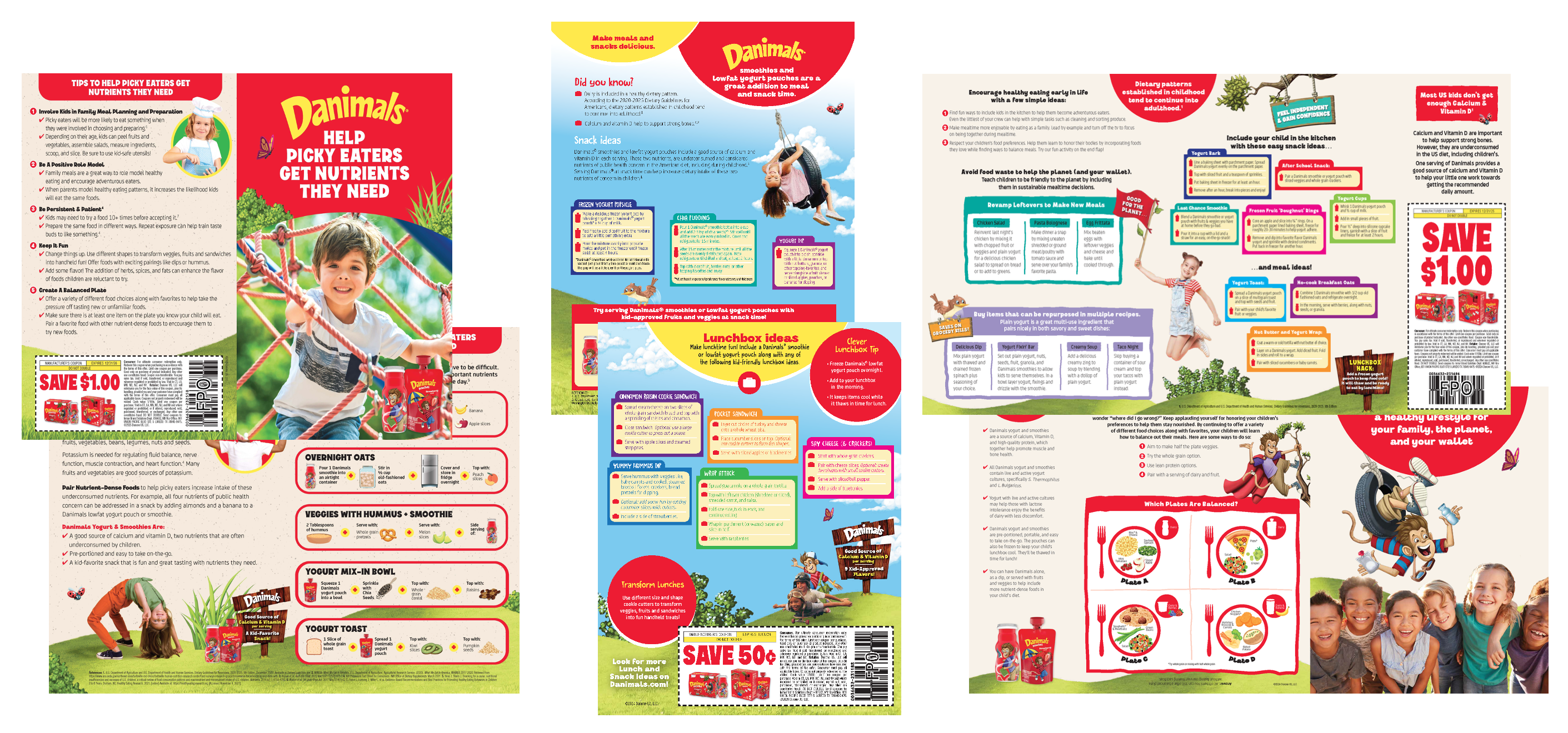

Most kids don’t consume the recommended levels of important key nutrients1. These nutrient gaps tend to widen after toddlerhood and into school-age years, with a notable increase around ages 5-8 years, when parental influence over food choices can decrease1,2.
During this time, children’s intake of key food groups, including dairy, fruits and vegetables tend to decline, leading to reduced intakes of calcium, vitamin D, fiber and potassium, increasing long-term chronic disease risk1-6.
Calcium is important for bone health, especially during periods of rapid growth, such as childhood. While younger children tend to get adequate calcium, intakes tend to decline as children get older4.
Vitamin D is also important for healthy bones but is found naturally in very few foods. Most children ≥ 1 year of age do not consume enough vitamin D1,4.
Dietary Fiber is a non-digestible carbohydrate, shown to be an important part of a healthy diet. Only about 6% of individuals ≥1 year of age have dietary fiber intakes above the Adequate Intake (AI) level1,5.
Potassium is an essential dietary mineral and electrolyte that plays a role in regulating fluid balance, nerve function, muscle contraction and blood pressure regulation. Many fruits and vegetables are a good source of potassium6.
Kids love snacks, and selecting nutrient-dense options doesn’t need to be difficult. Snack time can be a meaningful opportunity to help children get nutrients they may be missing throughout the day. Danimals Smoothies & Low-Fat Yogurt Pouches now provide calcium, vitamin D and fiber, nutrients commonly underconsumed by kids, and can be easily paired with food like fruits and whole grains to help children meet daily nutrient needs.
Actual intake shown as % of recommended daily allowance1. RDA for vitamin D: 4 to 18 years is 15 mcg7.
Actual intake shown as % of recommended daily allowance1. The AI for fiber: 4 to 8 years (25g); 9 to 13 years (Males 31g; Females 26g); 14 to 18 years (Males 38g; Females 26g)7.
Actual intake shown as % of recommended daily allowance1. RDA for calcium: 4 to 8 years is 1000mg; 9 to 18 years is 1300mg7.